About the Training
CFU Tanzania has empowered smallholder farmers with essential Conservation Agriculture skills through targeted, hands-on training programs delivered over the past 12 years. These trainings focus on improving productivity, enhancing resilience to climate change, and promoting sustainable land use practices.
Key Training Areas
Minimum Tillage Techniques
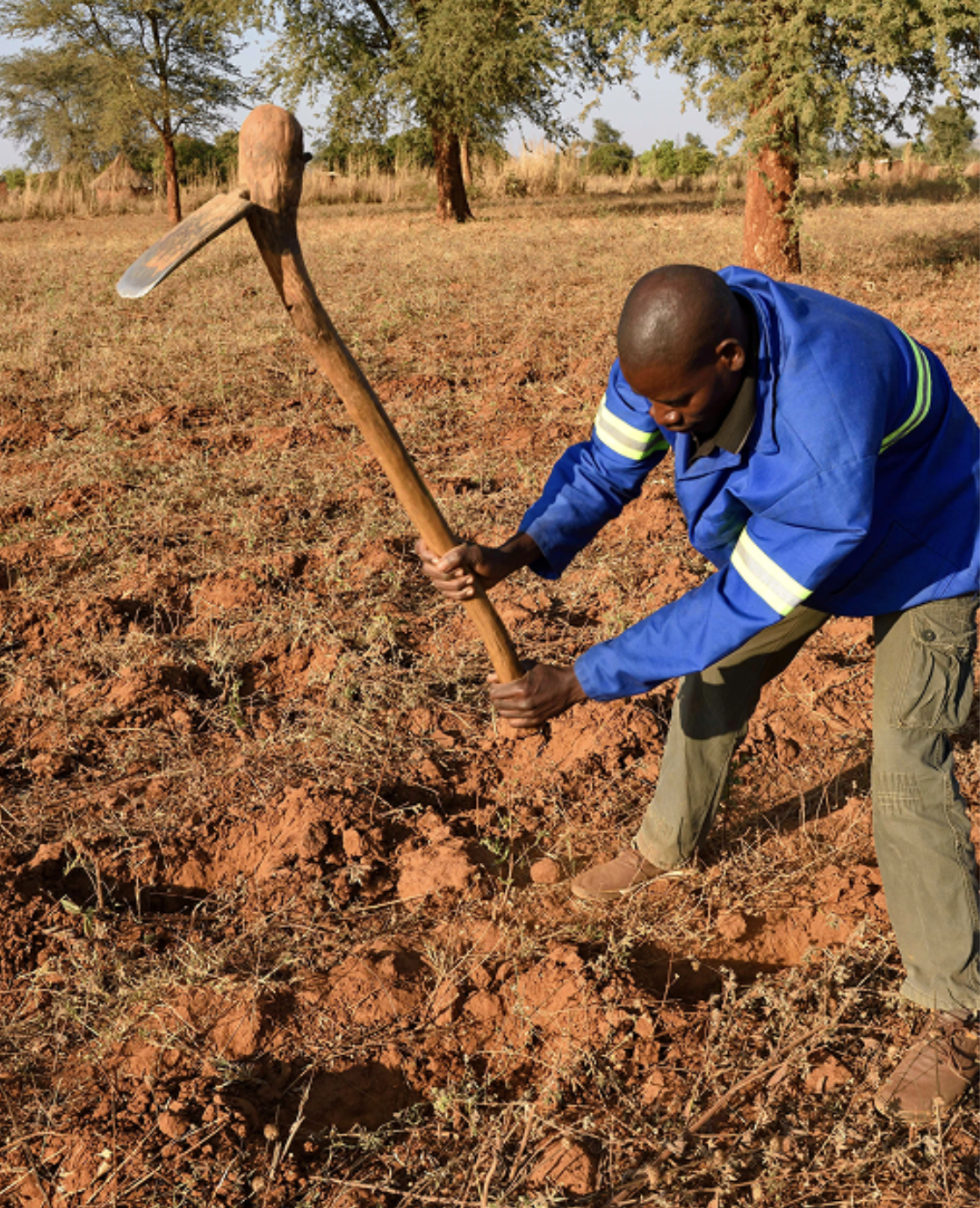
Farmers are trained on basin digging and rip-line planting methods that reduce soil disturbance, conserve moisture, and improve yields.
Soil Fertility & Soil Amelioration
Training includes organic matter management, composting, and cover cropping to restore soil health and fertility.
Crop Rotation & Intercropping
Farmers learn how to diversify crops to improve soil nutrients and reduce pest and disease risks.
Sustainable Planting Techniques
Improved spacing, timely planting, and proper crop establishment for maize, cassava, and vegetables.
Weed Management
Integrated weed control using mulching, rotation, and safe herbicide use to reduce labor and costs.
Pest & Disease Management
Sustainable crop protection methods including monitoring, biological controls, and resistant crop varieties.
Post-Harvest Management
Proper drying, storage, and handling techniques to reduce losses.
Agricultural Marketing
Training on value addition, group selling, and market access to increase farmer income.
Learning Through Demonstration
CFU Tanzania uses demonstration plots as practical training sites where farmers learn by doing. These plots showcase the benefits of Conservation Agriculture practices such as improved yields, soil health, and resilience to climate variability.
They also serve as awareness tools, allowing farmers to compare traditional farming methods with improved practices and adopt what works best.

Impact of Our Training

Yield increases of up to 80% in trials
Improved soil health and moisture retention
Reduced production costs
Increased resilience to climate variability
Higher farmer incomes and food security
Related Projects
-
Her Resilience, Our Planet (HROP)
The Her Resilience, Our Planet (HROP) programme funded by Global Affairs Canada. Is a 6 year initiative (2024-2030) focused on strengthening climate resilience and sustainable agricultural practices among smallholder farmers in Tanzania. The programme emphasizes gender-sensitive approaches to ensure inclusive participation and impact. KEY PROJECT DETAILS PROJECT OVERVIEW The HROP programme focuses on equipping farmers…
-
Regional Climate Smart Agricultural Programme (RCSAP)
The Regional Climate Smart Agricultural Programme (RCSAP), implemented from 2017 to 2020, was designed to strengthen climate resilience and improve agricultural productivity among smallholder farmers in Tanzania. The programme focused on promoting Climate Smart Agriculture and Conservation Agriculture practices in areas affected by erratic rainfall and soil degradation. KEY PROJECT DETAILS PROJECT OVERVIEW The RCSAP…
-
Tanzania Agricultural Partnership II (TAP II)
The Tanzania Agricultural Partnership II (TAP II), implemented from 2015 to 2020, was a five-year programme focused on scaling Conservation Agriculture practices among smallholder farmers in Tanzania. The initiative targeted key districts with the aim of improving productivity, enhancing resilience to climate variability, and strengthening sustainable farming systems. KEY PROJECT DETAILS PROJECT OVERVIEW The TAP…
-
Conservation Agriculture Regional Programme (CARP)
The Conservation Agriculture Regional Programme (CARP), implemented between 2013 and 2015, was a transformative initiative that introduced Conservation Agriculture practices to smallholder farmers across Tanzania, Kenya, and Uganda. The programme aimed to improve productivity, enhance resilience to climate change, and promote sustainable farming systems. KEY PROJECT DETAILS PROJECT OVERVIEW The CARP programme was designed to…